Australia Retirement Age – Australia’s proposal to gradually shift the retirement age toward 72–75 is becoming a major topic of discussion among working Australians, especially as economic conditions, workforce trends, and life expectancy continue to change. This policy direction aims to create a more sustainable pension system while ensuring that older citizens remain financially secure. In this article, we break down who will benefit first from this proposed shift, who may have to wait longer, and how the broader Australian retirement landscape may evolve over the coming years for both workers and retirees.
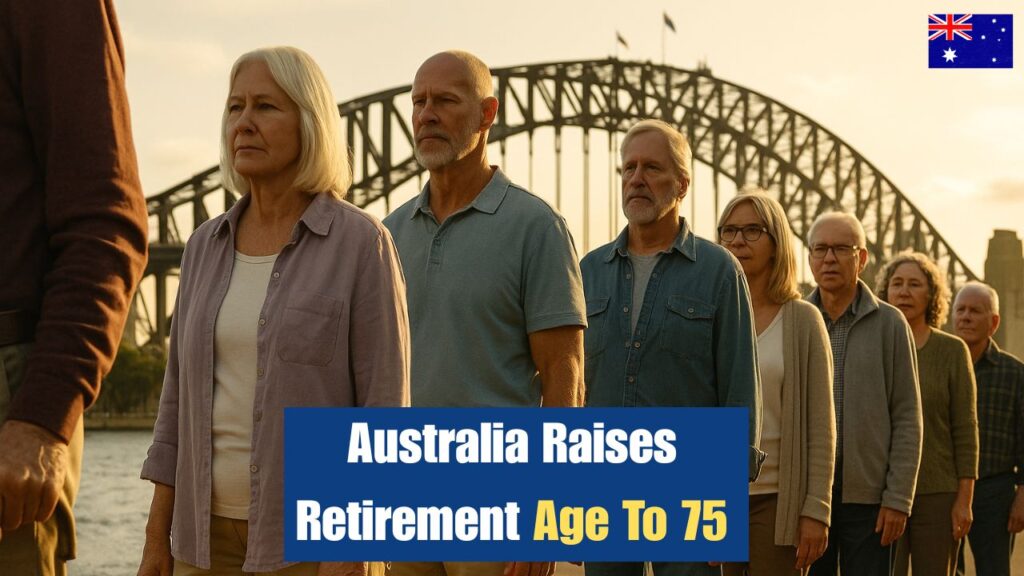
Raising Retirement Eligibility for Australian Citizens
The idea of increasing the retirement age to between 72 and 75 has significant implications for Australian citizens who are preparing for future pension access. This variation of the retirement age policy is influenced by rising life expectancy, labour force demands, and long-term federal budgeting needs. Many Australians who are currently in their mid-40s to late-50s may experience the earliest impact, as changes often roll out gradually across age cohorts. While some older Australians may retain access to the current pension age of 67, younger citizens are more likely to face extended working years under the revised eligibility framework. Understanding these changes early can help individuals adjust their planning accordingly.
 Australia New Child Car Seat Law Starts 10 December 2025: Parents Face $550 Fines for One Mistake
New Age Pension Framework for Australia’s Workforce
The proposed new age pension framework affects Australia’s workforce differently depending on birth year groupings and long-term financial behaviour. Under this new variation of retirement policy, individuals in younger working generations may need to prepare for additional savings, delayed pension payments, and extended employment opportunities. For workers approaching retirement within the next decade, transitional protections may apply, helping them avoid major disruptions. However, those who are currently in their 20s and 30s may be required to adapt to a significantly later retirement age. This change is part of a broader national strategy to maintain pension sustainability and support an evolving economy.
 Australia’s New AI Cameras: $415 Red-Light Fines and New Child Car Seat Safety Law Explained
| Birth Year Group | Estimated Retirement Age | Impact Level |
|---|---|---|
| Before 1965 | 67 (No Change) | Minimal |
| 1966–1975 | 68–70 | Moderate |
| 1976–1985 | 70–72 | High |
| 1986–1995 | 72–74 | Very High |
| After 1996 | 74–75+ | Maximum |
Retirement Reform Timeline Affecting Australians Nationwide
The broader retirement reform timeline is expected to influence Australians nationwide, with staged adjustments occurring over extended periods to ensure smoother transitions. This variation of policy planning may include updated pension calculations, superannuation reforms, and workforce participation incentives for older employees. As these shifts unfold, Australians across various regions will encounter different challenges depending on career type, income level, and savings stability. The government may also increase support programs for physically demanding professions that cannot sustain longer working years. Ultimately, a phased model ensures that no single generation shoulders the entire burden of change.
Long-Term Pension Stability Strategy for the Australian Economy
The long-term pension stability strategy being discussed within the Australian economy focuses on balancing the nation’s financial commitments with the needs of future retirees. This related variation underscores why extending the retirement age aligns with broader economic goals, including reducing pressure on taxpayer-funded systems and encouraging greater individual financial responsibility. For Australians who are still early in their working lives, these reforms highlight the importance of enhanced superannuation contributions, diversified savings plans, and ongoing financial education. A well-structured retirement strategy will help the country maintain stability while supporting an ageing population.
Frequently Asked Questions (FAQs)
 Centrelink $750 Top-Up for November 2025: Eligibility, Required Documents and Fast Payment Details
1. Who will face the earliest impact of the new retirement age?
Australians currently in their mid-40s to late-50s may experience the first measurable changes.
2. Will the pension age increase immediately for everyone?
No, changes are expected to roll out gradually across different age groups.
3. Are older Australians near retirement affected?
Most Australians close to retirement age are likely to remain under the current age threshold.
4. Why is Australia considering a retirement age of 72–75?
The shift aims to support long-term pension sustainability as life expectancy and costs rise.