Australia New AI Red Light Cameras – Australia’s new AI-powered red-light camera system has introduced a major shift in how traffic offences are detected and penalised. These advanced cameras can now identify rolling-red violations even when a driver does not fully cross the intersection line. This updated enforcement method aims to reduce accidents, improve road discipline, and strengthen public safety across the country. As Australian drivers adapt to this stricter monitoring technology, many are seeking clarity on how these AI cameras function, when fines apply, and what rules have changed compared to traditional red-light systems. This article explains everything clearly and simply.
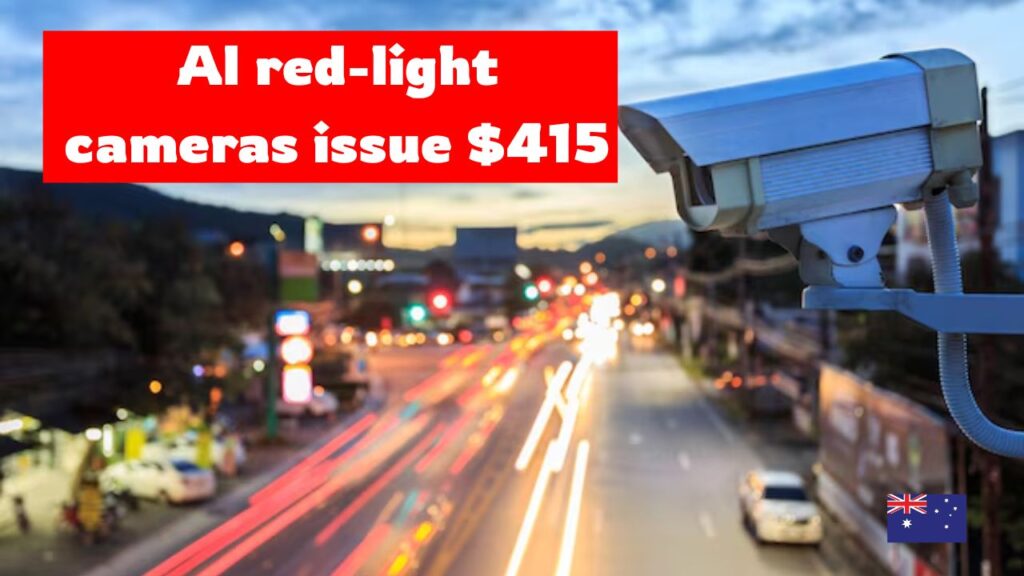
AI Red-Light Camera Rules for Australian Drivers
The introduction of AI red-light camera rules for Australian drivers marks one of the most significant road safety updates in recent years. These cameras use machine learning to detect subtle violations such as rolling-red movements, where vehicles inch forward after the signal turns red without fully crossing the stop line. Authorities across Australia believe this technology will reduce risky behaviour at intersections and lower crash rates caused by impatient or distracted driving. The system captures vehicle speed, wheel movement, and stop-line behaviour, making it extremely accurate in identifying offences. Drivers must now be extra cautious and ensure their vehicle is fully stationary to avoid receiving a $415 fine.
 Australia New Child Car Seat Law Starts 10 December 2025: Parents Face $550 Fines for One Mistake
Rolling-Red Detection Technology Across Australia
Rolling-red detection technology across Australia works by analysing continuous video frames rather than relying on a single captured image. This allows the system to recognise gradual forward motion that traditional cameras often fail to detect. The AI checks whether a vehicle remains completely stationary when the traffic signal is red, and any forward creep — even a few centimetres — can trigger a penalty. Australian road authorities emphasise that this update addresses common intersection behaviours that increase collision risks, especially involving pedestrians and cyclists. The high-precision sensors and AI algorithms help ensure fair, consistent enforcement across busy Australian cities.
 Australia’s New AI Cameras: $415 Red-Light Fines and New Child Car Seat Safety Law Explained
| Offence Type | Fine Amount | Detection Method | Applies When |
|---|---|---|---|
| Rolling-Red Violation | $415 | AI Motion Tracking | Vehicle moves during red signal |
| Full Red-Light Run | $480+ | AI & Speed Sensors | Vehicle crosses stop line on red |
| Stop-Line Creep | $415 | Wheel Position Analysis | Tires cross or touch stop line |
| Pedestrian Risk Movement | $450 | Behavioural AI | Vehicle approaches crossing area |
| Intersection Blocking | $350 | AI Pattern Detection | Vehicle stops inside intersection |
Updated Traffic Enforcement Rules for Australians Nationwide
The updated traffic enforcement rules for Australians nationwide emphasise complete compliance at intersections as AI replaces older camera technology. Transport regulators highlight that the purpose of these rules is not only penalty issuance but long-term behavioural change among drivers. With AI offering near-perfect accuracy, excuses such as “I did not cross the line” or “my car rolled accidentally” no longer prevent fines. Drivers across the nation must now maintain a clear halt well behind the stop line and avoid inching forward while waiting. This shift aligns with Australia’s broader road-safety agenda aimed at reducing intersection fatalities by 2026.
Smart Traffic Safety Measures by Australian Authorities
Smart traffic safety measures introduced by Australian authorities now integrate AI cameras, predictive analytics, and improved signal timing to create safer intersections. These enhancements monitor driver behaviour in real time and allow data-driven planning for crash-prone zones. Authorities argue that rolling-red violations, though often seen as minor, contribute significantly to sudden-impact collisions and pedestrian injuries. By deploying AI technology, the government aims to create an environment where drivers are encouraged to develop safer habits, reducing long-term accident rates and improving traffic flow across major Australian regions.
Frequently Asked Questions (FAQs)
 Centrelink $750 Top-Up for November 2025: Eligibility, Required Documents and Fast Payment Details
1. What is a rolling-red violation under Australia’s new AI rules?
A rolling-red violation occurs when a vehicle moves forward even slightly after the light has turned red.
2. Can you be fined without crossing the stop line?
Yes, AI cameras can issue a $415 fine even if your vehicle only creeps forward.
3. Are these new AI cameras active across all Australian states?
Most major states have begun implementation, with nationwide rollout expected soon.
4. How can drivers avoid getting caught by rolling-red detection?
Drivers must remain completely stationary behind the stop line until the light turns green.